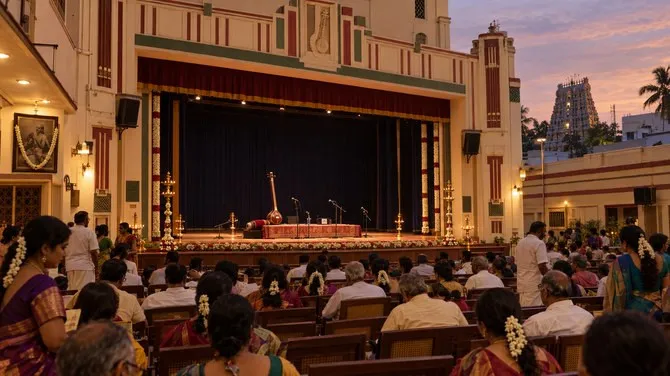
Every December, while most of Indian hospitality watches Goa and the hill stations, Chennai quietly hosts one of the largest cultural gatherings in the world. The Margazhi music season, named after the Tamil month that runs from mid-December to mid-January, brings hundreds of Carnatic music and classical dance performances to the city's sabhas, the auditoriums and cultural halls concentrated around Mylapore, Alwarpet, T. Nagar and RA Puram. The season's anchor institution, the Music Academy, has scheduled its centenary concerts from 15 December to 1 January, and trackers of the season already count hundreds of concerts across more than a dozen sabhas, with more added as schedules publish. For small hotels and guesthouses in these neighbourhoods, this is not an event spike. It is a month-long second peak, and it is only about three weeks away.
The guest profile is what makes the season so valuable. The audiences are rasikas, the devoted listeners who attend concerts daily, often several in one day. They include performing artists and their accompanists, students on learning pilgrimages, and a large share of NRI families who time their annual Chennai visit to the season. These guests do not book one or two nights. They book a week, two weeks, sometimes the whole stretch, and they return to the same property year after year when the experience works. A small hotel that earns a rasika's loyalty this December has effectively pre-booked a room for next December.
The daily rhythm of the season is unusual, and it rewards properties that design around it. At the Music Academy, the first three concerts of the day, at nine in the morning, quarter to twelve and half past one, are free, while the four o'clock and quarter to seven evening concerts are ticketed. That means guests are out of the hotel early, back in the afternoon to rest, and out again in the evening. Breakfast cannot start at eight. Properties that serve an early tiffin and filter coffee from around seven, or offer a takeaway option, immediately stand out. Housekeeping works best mid-morning and mid-afternoon, when rooms are empty anyway. None of this costs much. All of it reads as understanding.
Pricing and inventory need attention now, not in mid-December. Block your season dates this week and set a weekly rate alongside the nightly one, because the enquiry you lose is the guest comparing a thirteen-night total against a competitor's season package. Keep some flexibility on check-in and check-out days, since many NRI guests stitch the season around flights and family events. If you have adjoining rooms or a small annexe, hold them for the family groups that book late and pay well.
A few operational details separate a good season stay from a great one. Keep a printed or shared list of the major sabhas and their schedules at the front desk, updated weekly, because guests will ask which morning concert is worth the auto ride. Arrange a reliable auto or cab contact for the early starts, since app availability at eight in the morning in Mylapore can be patchy during the season rush. Offer laundry turnaround that suits a long stay rather than a transit guest. And train the team on the vocabulary: a guest who asks about a lec-dem, a kutcheri or a specific sabha is telling you exactly why they are in town, and a front desk that follows the conversation books repeat business.
Do not ignore the food angle. The season has its own parallel culture of sabha canteens, the pop-up catering stalls run by well-known Chennai caterers, and many rasikas plan their day around where they eat as much as what they hear. A hotel that keeps simple, reliable meals available at odd hours, or can point guests to the day's notable canteen, becomes part of the ritual.
The larger point is that the Margazhi season is predictable demand. It happens every year, on roughly the same dates, in the same neighbourhoods, with the same guest behaviour. Unlike a wedding enquiry or a festival weekend, you can prepare for it with a checklist and a calendar rather than a gamble. The properties that treat December as a second peak season, with blocked inventory, early breakfasts, weekly rates and a team that knows the sabha map, are the ones whose December occupancy looks effortless. The season starts in three weeks. The guests who plan early have already started booking.
Sanskar Soni is the founder of Mehman, an India-first hotel management platform being built for independent and small-chain properties. He writes about the operational side of hospitality for small hotels.


