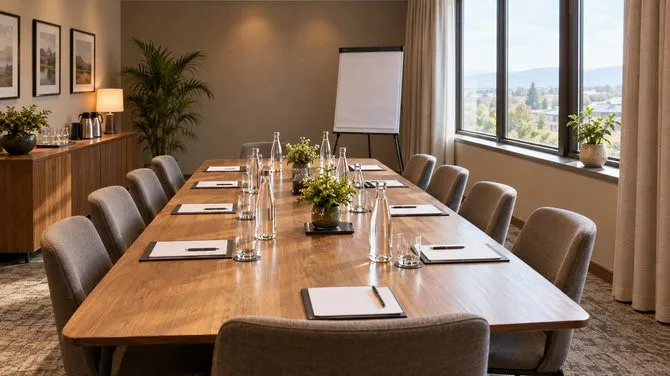
The December conversation in hospitality usually centres on leisure travellers: Christmas week, New Year's Eve, the family holiday surge. But there is a second December rush that small and mid-sized hotels are quietly well placed to win, and it is being decided right now, in the last weeks of November. Companies are closing out their year: team offsites, annual day celebrations, client dinners that turn into overnight stays, and regional teams flying in for year-end reviews. These bookings are made in late November and early December, they are group-sized, and they go to the property that responds first with a workable plan.
The corporate year-end enquiry differs from a leisure booking in ways that reward preparation. The person asking is rarely the person staying. It is an office administrator or an HR manager with a budget line, a headcount, and a deadline, comparing three or four properties at once. They need a quote they can forward to their manager without embarrassment: per-room rates for a block, meal options priced per head, a clear statement of what is included, and payment terms that survive their finance process. The property that sends this in one message, within hours, is already ahead.
Speed matters because these planners work on office hours and short fuses. An enquiry that sits unanswered overnight usually dies; the planner simply books the property that replied. During this season, treat every corporate enquiry as a same-hour task. Even a holding reply that names the person handling it and commits to a full quote by a stated time keeps you in the running.
Think about what these groups actually need beyond rooms. Most year-end offsites want a meeting space for a half day, tea and lunch service, and somewhere for the team to gather in the evening. If your property has even a modest hall or a restaurant that can be sectioned off, say so in the first reply, with honest capacity numbers. If you do not have event space, say that too, and lead with what you do have: clean rooms near their venue, early breakfast for a group with a morning agenda, and straightforward billing to one company account.
Billing is where small hotels quietly win or lose this business. Companies need a single invoice, a GST-compliant bill, and a payment process that does not require ten guests to pay individually at checkout. Offering centralized billing with an advance and a balance on a defined date is often the detail that closes the deal, because it saves the planner a reimbursement nightmare. Confirm it in writing before the stay, and assign one person on your side to own the account from enquiry to invoice.
The group-stay discipline from wedding season applies here as well: block the rooms out of online channels the moment the block is confirmed, keep one thread of communication with the planner, and reconfirm numbers a few days before arrival. Corporate headcounts drift; a final count three days out protects both sides.
Two cautions are worth stating. First, do not overcommit your common spaces. A year-end dinner in your restaurant and a full house of leisure guests can collide badly if the same small team is running both; know your staffing ceiling before you accept the second group on the same night. Second, price the whole package honestly. A cheap room rate that hides meal and venue charges produces a planner who feels misled, and corporate planners talk to other companies.
The reward for getting this right extends well past December. A company whose year-end stay went smoothly becomes a repeating account: quarterly reviews, visiting leadership, training batches through the year. The administrator who booked you once has your number saved. December's corporate rush is short, but the relationships it builds are not. Prepare the quote template, the billing routine and the space plan now, while the enquiries are still being decided.


