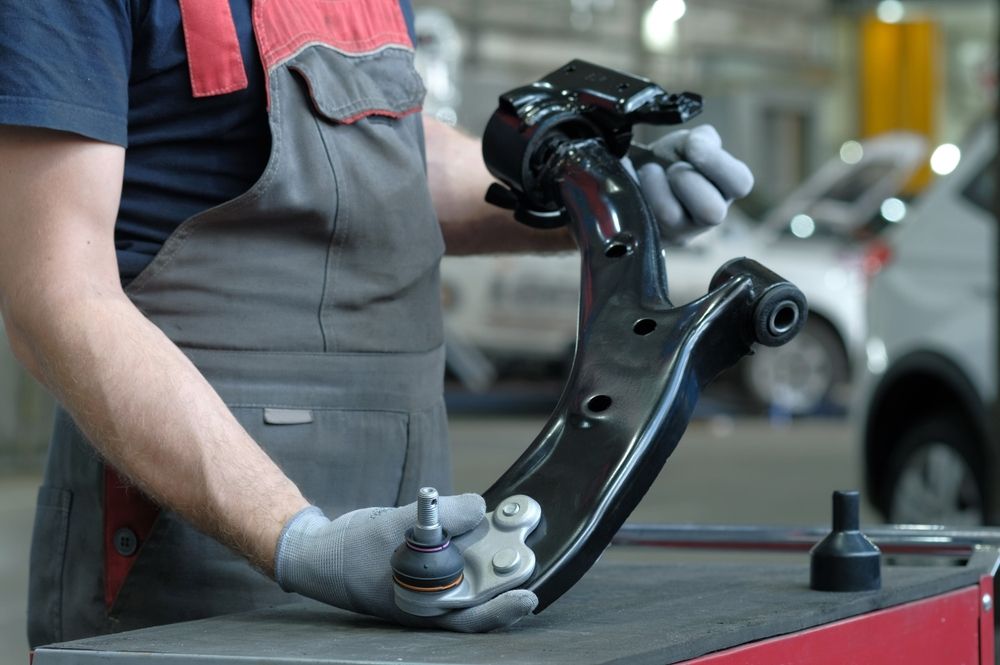
The passenger vehicle industry is changing at a pace that leaves little room for outdated engineering practices. Vehicle platforms are becoming more electronics-driven, weight reduction is gaining importance, and buyers expect better safety, comfort and efficiency from every new model. Behind these changes sits a crucial link in the supply chain: the passenger vehicle auto components manufacturer.
For component manufacturers, preparing for the future involves much more than adding new machines. It requires decisions about materials, manufacturing processes, validation, quality systems, and product development. A passenger vehicle auto components manufacturer that plans these areas together is better positioned to meet changing vehicle requirements without repeatedly rebuilding its production capabilities.
What Future-Ready Engineering Really Means
Future-ready engineering is essentially about designing components and manufacturing systems that can adapt to changing vehicle architectures. A component may need to become lighter, more compact, stronger or more integrated with electronic systems while maintaining consistent performance.
This requires manufacturers to look beyond the immediate production requirement.
Several engineering priorities are becoming increasingly important:
- Lightweight construction without compromising structural performance
- Higher dimensional accuracy and process repeatability
- Greater use of advanced materials
- Design compatibility with changing vehicle architectures
- Faster product validation and testing
- Greater integration between engineering and manufacturing data
The challenge is finding the right balance. A lighter component is useful only when it continues to perform reliably throughout its service life.
Engineering Strategies Shaping Component Development
Designing for Weight Reduction
Weight has a direct relationship with vehicle efficiency. Even relatively small reductions across multiple components can contribute to lower overall vehicle mass.
For a passenger car component manufacturer India, this means examining component geometry, material selection and manufacturing methods together. Engineers can use simulation and design optimisation to identify areas where material can be reduced without weakening critical sections.
The approach is particularly valuable for components where unnecessary material adds weight but little functional benefit.
Selecting Materials With Greater Precision
Material selection is no longer simply a question of strength and availability. Engineers must consider fatigue behaviour, corrosion resistance, manufacturability, thermal conditions, weight and cost.
The right material depends on the component's operating environment. A part exposed to repeated loads may require different characteristics from one primarily designed for dimensional stability or thermal resistance.
|
Engineering consideration |
Why it matters |
|
Strength |
Supports reliable operation under load |
|
Fatigue resistance |
Helps withstand repeated stress cycles |
|
Weight |
Contributes to overall vehicle efficiency |
|
Corrosion resistance |
Supports long-term durability |
|
Manufacturability |
Influences production consistency and cost |
|
Thermal performance |
Matters where components face temperature variation |
A careful material strategy can therefore improve both component performance and manufacturing efficiency.
Building Manufacturing Flexibility Into the Process
A component design may be excellent on paper, but production capability ultimately determines whether that design can be delivered consistently.
A future-ready production system should accommodate changes in volumes, specifications and product variants without excessive disruption. Flexible tooling, programmable equipment, automated inspection and adaptable production layouts can help manufacturers respond to these shifts.
For a passenger car component manufacturer India, flexibility is particularly useful when vehicle platforms evolve or multiple component variations need to be produced using related processes.
Connecting Engineering With Quality Data
Quality should enter the engineering conversation early. When inspection data is separated from product development, valuable information can remain unused.
Modern manufacturing systems can connect dimensional results, defect records, process parameters and machine data. Engineers can then identify recurring patterns and determine whether a design or process requires modification.
This creates a practical feedback loop:
Design → Prototype → Validation → Production → Inspection → Data Analysis → Engineering Improvement
The cycle becomes more useful when decisions are based on actual production evidence rather than assumptions made during the initial design stage.
Preparing for More Complex Vehicle Architectures
Passenger vehicles increasingly combine mechanical components with sensors, electronic controls and software-supported functions. Even components that were traditionally mechanical may need to accommodate tighter packaging requirements or interact with other vehicle systems.
This changes how components are engineered.
Manufacturers need to consider installation space, interfaces, tolerances and compatibility with surrounding systems from the beginning. A component that works independently may still create problems if it interferes with another system during assembly or operation.
This is why cross-functional engineering is becoming more important. Product engineers, manufacturing specialists and quality teams need to work from the same technical understanding.
Strengthening Validation Before Production
Future-ready engineering also means taking validation seriously. A component should be assessed under conditions that reflect its intended application rather than relying solely on basic dimensional checks.
Depending on the component, validation may involve:
- Load and fatigue testing
- Dimensional verification
- Environmental exposure
- Corrosion assessment
- Thermal testing
- Functional evaluation
- Durability testing
Early validation can reveal weaknesses before they become expensive production problems. It also gives engineers useful information for refining the design before large-scale manufacturing begins.
Why Continuous Improvement Matters
Engineering does not end when a component enters production. Manufacturing experience can reveal opportunities that were difficult to identify during development.
A tooling adjustment might improve consistency. A geometry change might simplify machining. A different inspection method might identify defects earlier. Small improvements, repeated over time, can have a significant effect on production performance.
This mindset is particularly important for auto parts, where manufacturers need to balance demanding quality expectations with competitive production requirements.
Padmini VNA approaches component manufacturing with attention to engineering precision, production reliability and changing automotive requirements. The ability to improve continuously is increasingly becoming part of the engineering capability itself.
Conclusion
The future of automotive component manufacturing will favour companies that prepare before requirements become urgent. For a passenger vehicle auto components manufacturer, that means combining lightweight design, suitable materials, flexible production, connected quality systems and rigorous validation.
The same principles matter to a passenger car component manufacturer India as vehicle platforms continue to evolve. For auto parts manufacturers in India, future-ready engineering is ultimately about creating components that can meet tighter requirements while remaining practical to manufacture at scale.
Padmini VNA recognises that durable component manufacturing depends on this balance between engineering detail and production discipline. As passenger vehicles become more sophisticated, manufacturers that build adaptability into their engineering processes will be better prepared for what comes next.