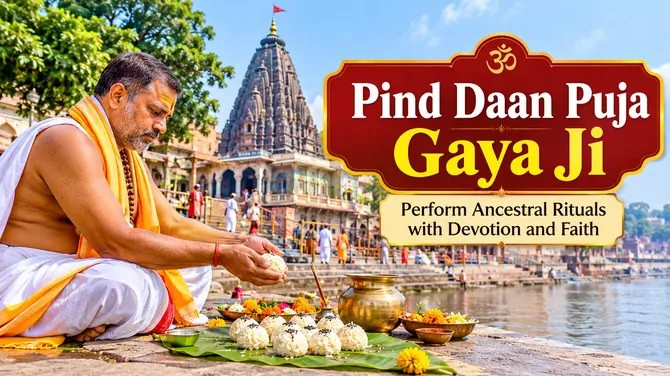
Gaya Ji, located in Bihar, India, is widely known as an important pilgrimage destination for Hindu families who wish to perform ancestral rituals. Devotees from different parts of India visit this sacred city to remember their departed family members and perform traditional ceremonies with devotion. Among these rituals, Pind Daan holds a special place in Hindu traditions and is an important reason why families travel to Gaya Ji.
Pind Daan is a traditional Hindu ancestral ritual performed to offer prayers and express respect for departed souls. Families perform this ceremony according to their religious traditions and family customs. It generally involves preparing pind offerings and performing specific rituals under the guidance of a knowledgeable Vedic Pandit. For many devotees, the ceremony is also an opportunity to remember their ancestors and fulfil important family responsibilities.
Gaya Ji has several sacred locations associated with ancestral ceremonies. Vishnupad Temple is one of the most recognised religious places in the city. The Falgu River is another important location where devotees perform traditional rituals. Akshayavat is also considered significant in the religious traditions associated with Gaya Ji. These places attract families throughout the year, especially during Pitru Paksha, when many devotees visit to perform Pind Daan and Shraddha ceremonies.
Planning the ceremony in advance can make the visit more organised. Families should understand which ritual they need, how many family members will participate, and how much time they may require in Gaya Ji. Speaking with an experienced Vedic Pandit before travelling can help clarify the traditional procedure, necessary arrangements, and preparations for the ceremony.
There are different ancestral rituals performed according to family traditions and religious requirements. These may include Pind Daan Puja, Shraddha Puja, Tripindi Shraddha, Narayan Bali Shraddha, and Pitru Dosha Shanti Puja. Each ceremony has its own traditional procedure and religious significance. Families should discuss their requirements with a knowledgeable Pandit rather than choosing a ritual without understanding its purpose.
Those planning their ancestral ceremony can explore Pind Daan Puja Gaya Ji services to learn more about the traditional arrangements and available guidance.
Pitru Paksha is considered an especially important period for ancestral rituals. During these days, many Hindu families visit Gaya Ji to perform Pind Daan and Shraddha according to their family customs. Due to the increased number of visitors, planning accommodation, travel, and ritual arrangements in advance can help avoid last-minute difficulties.
For families visiting Gaya Ji for the first time, having clear information about the ceremony can make the experience easier to understand. It is useful to ask about the location, duration, required materials, and traditional steps before beginning the puja.
Pind Daan is not simply a religious activity for many families; it is also a way of remembering their ancestors and maintaining a connection with family traditions. With proper preparation and guidance, devotees can perform these ceremonies with sincerity, respect, and devotion.
Families looking for further information about ancestral rituals, puja arrangements, and guidance for their visit can also visit Pind Daan Puja Gaya Ji.