There is a certain kind of noise you get used to when you live in a city. At first, it feels sharp. Honking outside, footsteps from above, a television playing next door. Then, slowly, it blends into the background. But it never really disappears.
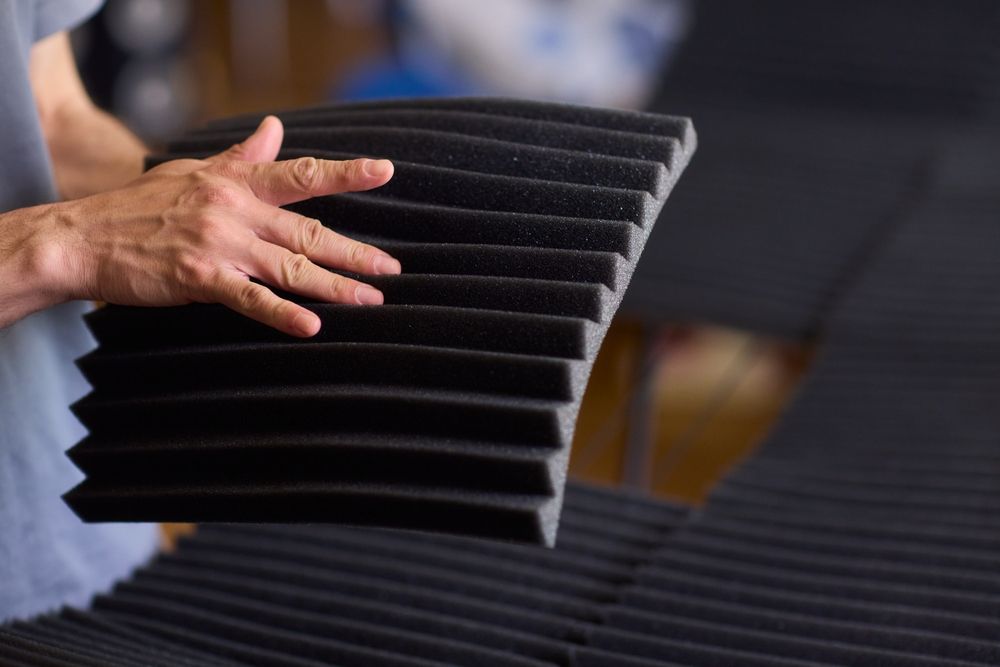
It lingers. In the walls, in the ceilings, in the pauses between conversations. And over time, it begins to affect how a space feels. Not visibly, not dramatically. Just enough to make a home feel less calm than it should. This is where noise cancelling foam quietly changes things.
It does not silence the world outside. That would be unrealistic. What it does instead is soften it, control it, make it manageable. And in urban living, that difference matters more than most people realise.
The Reality of Urban Sound
Cities are layered with sound. It comes from different directions, at different intensities, often at the same time.
- Traffic moving continuously
- Construction work nearby
- Conversations travelling through shared walls
- Appliances humming in adjacent spaces
Unlike occasional noise, this is constant. It builds up.
And when sound becomes part of the environment, it starts shaping behaviour. People speak louder, sleep lighter, concentrate less. The space begins to feel less like a retreat and more like an extension of the outside world.
Why Traditional Materials Fall Short
Most buildings are designed with structure in mind. Strength, durability, cost efficiency. Sound control often comes later, if at all.
Concrete and brick do block some noise, but not all. Gaps, joints, and surfaces allow sound to travel in unexpected ways.
Here is a simple comparison:
|
Material |
Sound Control Effectiveness |
|
Concrete Walls |
Moderate |
|
Glass Panels |
Low |
|
Wooden Partitions |
Variable |
|
Noise Insulation Foam |
High (when applied correctly) |
The difference lies in how sound is handled. Hard surfaces reflect sound. Foam absorbs it.
How Foam Changes the Experience of Space
The impact of sound control is not always obvious during a quick visit. But over time, it becomes noticeable.
A quieter room feels different.
- Conversations are clearer
- External disturbances are reduced
- Echo within the room decreases
- Overall comfort improves
Noise insulation foam works by absorbing sound waves instead of letting them bounce around. This reduces both incoming noise and internal reverberation.
It is a subtle shift, but it changes how a space behaves.
Understanding Acoustic Foam Soundproofing in Practice
When people think of soundproofing, they often imagine complete silence. That is rarely the goal in residential settings.
Instead, the focus is on control.
Acoustic foam soundproofing helps manage sound within a space. It reduces echo, limits sound transmission, and improves clarity.
Common applications include:
- Bedroom walls for better sleep quality
- Home offices for focused work
- Media rooms for improved audio experience
- Shared walls in apartments
What makes acoustic foam soundproofing effective is its structure. The material traps sound energy, converting it into minimal heat instead of reflecting it back.
Placement Matters More Than Quantity
Adding more material does not always lead to better results. Placement plays a crucial role.
Strategic positioning can significantly improve performance.
- Walls facing external noise sources
- Ceilings in multi-storey buildings
- Corners where sound tends to accumulate
- Behind speakers in media setups
A well-planned installation often performs better than a larger, poorly placed one.
The Balance Between Comfort and Design
There is often a concern that soundproofing materials might affect the visual appeal of a space.
That used to be true.
Modern foam solutions are designed to blend into interiors. They come in various shapes, textures, and finishes, allowing them to complement rather than disrupt design.
This balance matters, especially in homes where aesthetics and functionality need to coexist.
A Closer Look at Everyday Benefits
The advantages of noise insulation foam are not dramatic. They show up in small, consistent ways.
|
Situation |
With Noise Control |
Without Noise Control |
|
Sleeping |
Fewer disturbances |
Frequent interruptions |
|
Working from Home |
Better focus |
Background distractions |
|
Conversations |
Clearer communication |
Overlapping noise |
|
Relaxation |
Calmer environment |
Persistent sound |
These are everyday experiences. Improving them improves how a space is lived in.
Urban Homes Are Becoming Multi-Functional
Homes are no longer used in one way.
A living room becomes a workspace during the day. A bedroom doubles as a meeting area. Entertainment and work often share the same space.
This overlap increases the need for sound control.
Noise insulation foam supports this flexibility by helping different activities coexist without interference.
- Calls remain clear even with background activity
- Entertainment does not disturb adjacent rooms
- Workspaces feel more defined
It allows a single space to serve multiple purposes more effectively.
Maintenance and Longevity
One of the practical advantages of foam-based solutions is their durability.
Once installed, they require minimal maintenance. They do not degrade quickly under normal conditions and retain their performance over time.
This makes them suitable for long-term use, especially in residential settings where constant adjustments are not ideal.
Beyond Homes: A Broader Perspective
While urban homes are a major area of application, similar principles apply elsewhere.
Vehicles, for instance, rely on automotive sound deadening foam to reduce engine noise and improve cabin comfort. The goal is the same. Control sound, improve experience.
This overlap shows how sound management is becoming a common consideration across environments.
A Practical Approach to Getting Started
For those considering sound insulation, the process does not need to be complicated.
Start with observation.
- Identify the main sources of noise
- Notice how sound travels within the space
- Prioritise areas where improvement is needed most
From there, solutions can be applied gradually.
Even small changes can make a noticeable difference.
Final Thoughts
Urban living brings convenience, access, and opportunity. It also brings noise. Not always loud, but always present.
Managing that noise is less about eliminating it and more about shaping how it is experienced.
This is where noise insulation foam proves its value. It works quietly, almost invisibly, improving comfort in ways that become clear over time.
As materials continue to evolve, the focus is shifting toward creating spaces that feel as good as they function. For those exploring advanced foam solutions, including specialised options used across industries, companies like Sheela Foam continue to contribute to this space with materials designed for both performance and everyday comfort.