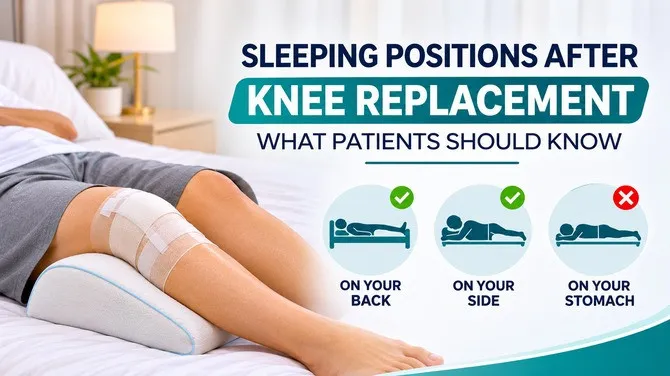
Sleep can be difficult during the first weeks after knee replacement. Pain, swelling, a change in routine, medicines and the need to move carefully can interrupt rest. Patients may also be unsure whether they should sleep on their back or side, or whether a pillow should be placed under the knee.
The safest position depends on the surgeon's instructions, the operation performed and the patient's comfort. The aim is to support the leg without placing unnecessary pressure on the wound or keeping the knee in a prolonged bent position.
Back sleeping
Many patients find it easiest to begin by sleeping on their back, particularly during the early recovery period. The leg can be positioned comfortably and supported as advised by the surgical team. Some patients are instructed to work towards full knee straightening rather than resting with a thick pillow directly under the knee for long periods. Prolonged positioning in a bent posture may make it harder to regain full extension in some patients.
If elevation is recommended to help swelling, ask where the support should be placed and how high the leg should be. Do not use a position that causes numbness, pressure or increased pain.
Side sleeping
Some patients can return to side sleeping when it is comfortable and safe. A pillow between the legs may help keep the operated limb supported and reduce twisting. The timing depends on wound comfort, balance and the surgeon's guidance. Avoid lying directly on a painful or sensitive area if it causes discomfort.
When changing position, move slowly and use the bed or a support surface as instructed. If you need help getting in or out of bed, ask your physiotherapist to demonstrate a safe technique before going home.
Practical ways to improve sleep
Keep to the prescribed pain-management schedule and discuss night-time pain with the treating team rather than changing doses yourself. A short, gentle walk or the recommended exercises earlier in the evening may help some patients, but avoid overexertion close to bedtime. Keep a phone, water, medicines and frequently used items within reach, and use a night light to reduce fall risk.
Swelling may feel more noticeable after a day of activity. Follow instructions about cold packs or elevation, and protect the skin from direct contact with ice. Avoid alcohol or unapproved sleep medicines, especially when taking prescription pain medication.
When poor sleep needs review
Sleep may improve gradually as pain and swelling settle. Contact the care team if pain is persistently uncontrolled, medicines cause troublesome side effects, or you cannot find a tolerable position. New calf swelling or pain needs prompt assessment. Sudden breathlessness or chest pain is an emergency. Fever, increasing wound redness or drainage should also be reported.
If sleep remains poor for several weeks, discuss it at follow-up. The team can review pain, activity, medicines and other possible causes.
Conclusion
There is no single sleeping position that suits every patient after knee replacement. Follow the instructions provided by your surgeon, use supports only as advised and prioritise safe movement when getting in and out of bed. Learn more about knee replacement care at OrthoD Hospital or contact the hospital for guidance.
Frequently Asked Questions
What is the best sleeping position after knee replacement?
Many patients start on their back, but the appropriate position depends on comfort, wound status and the surgeon's instructions.
Can I sleep on my side after knee replacement?
Some patients can do so when it is comfortable and safe. Ask your surgeon when to resume side sleeping and whether a pillow is recommended.
Should I put a pillow under my operated knee?
Follow your physiotherapist's advice. Prolonged support directly under a bent knee may interfere with regaining full straightening in some patients.
Why does my knee hurt more at night?
Pain, swelling, reduced distraction and changes in medication timing may contribute. Persistent or worsening pain should be discussed with the care team.
Can I take sleeping pills after surgery?
Only take sleep medication if approved by your treating clinician, particularly if you are using prescription pain medicines.


