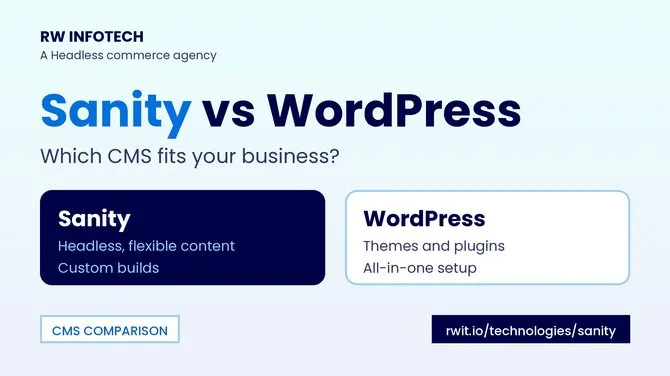
Choosing a content management system is one of the biggest decisions in a website project. Two names often come up: WordPress, the long-standing all-in-one platform, and Sanity, a modern headless CMS. Both can power a great website, but they suit different needs.
How they work
WordPress combines content management and the website in one system. You pick a theme, add plugins and publish. Sanity is headless: it stores your content in structured fields and delivers it through an API to any frontend, such as a Next.js website or a mobile app. Editors work in Sanity Studio, which can be customized to fit your team.
Where WordPress fits
- Blogs, brochure sites and small online shops that need to launch quickly
- A large library of themes and plugins
- A familiar editing experience for non-technical teams
- Lower upfront development effort
Where Sanity fits
- Content that must be reused across a website, apps and other channels
- A custom content structure built around your business
- Fast frontends built with modern frameworks
- Custom editing workflows and real-time collaboration
Things to consider
- Budget and timeline: WordPress is often quicker and cheaper to start, while Sanity needs development work but offers more flexibility later.
- Team skills: Sanity projects need developers, while WordPress can often be managed with little code.
- Maintenance: WordPress sites rely on plugins that need regular updates, while a headless setup keeps content and frontend separate.
- Growth: if you expect several channels or custom features, a headless CMS can save rework.
Which should you choose?
If you need a simple site live fast, WordPress is often enough. If you need flexible content, strong performance and room to grow, Sanity is worth a close look. A good starting point is to list what your site must do over the next two to three years, then choose the platform that supports it.
Not sure which fits? RW Infotech offers Sanity development and headless builds for growing businesses. Learn more at rwit.io.