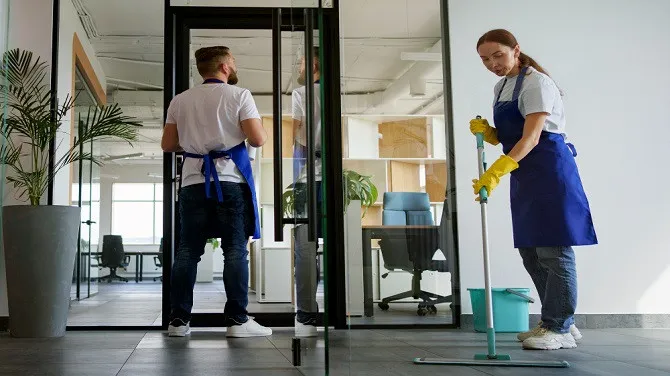
Office cleaning used to be simple. A cleaner arrived after closing time, emptied the bins, ran a vacuum and left before the first person came in. That model still exists, but commercial cleaning services now cover far more than it did, and the way businesses buy them has changed.
This article looks at six shifts that Ipswich managers, landlords and business owners are likely to notice. They come from general observation of how workplaces operate, not from survey figures, so treat them as patterns worth thinking about for your own premises.
What commercial cleaning covers today
The term describes cleaning for premises used by businesses and organisations. That includes offices, shops, warehouses, schools, clinics, restaurants and shared buildings. The work ranges from daily tasks, such as emptying bins and cleaning washrooms, to periodic jobs, such as carpet cleaning, window cleaning and deep cleans.
Some providers also handle outdoor work, such as pressure cleaning of walkways and building exteriors. The range matters because it shapes how a business writes its brief.
Shift 1: Cleaning hours are less fixed
Many workplaces no longer empty at six o'clock. Some teams start early, others work late, and some use their premises at weekends. Retail units, clinics and food businesses often operate over long hours.
As a result, providers offer flexible schedules. Early-morning visits, mid-day touchpoint cleans and weekend slots sit alongside the traditional evening shift. Businesses that once accepted whatever time the cleaner suggested now ask for a pattern that fits the building.
Shift 2: Hygiene is more visible
People pay more attention to how clean a shared space looks and feels. Door handles, lift buttons, desks, kitchen surfaces and washrooms get closer scrutiny. Staff and visitors notice when these areas are neglected.
Cleaning plans now often list high-touch points as a separate task, with a set frequency. Businesses want to know not only that the floor was mopped, but that the surfaces people touch every hour were cleaned.
Shift 3: Hybrid work changes the pattern
When staff split their week between home and office, occupancy varies from day to day. A building may be busy on Tuesday and Wednesday and quiet on Friday. Paying for the same cleaning every day no longer makes sense for many offices.
Some businesses move to a schedule tied to occupancy. Busy days get a full clean. Quiet days get a lighter visit. Shared desks and meeting rooms may be cleaned between uses. A clear scope helps both sides, because the plan can change without a new contract each time.
Shift 4: Buyers want one provider for several tasks
A building has many cleaning needs. There are floors, washrooms, kitchens, windows, carpets and sometimes outdoor surfaces. Managing separate providers for each is time-consuming.
More businesses now ask a single company to handle several of these. A typical package might include daily office cleaning, periodic carpet cleaning, window cleaning and a deep clean twice a year. One example is a local Ipswich cleaning company that lists office and commercial cleaning among its services. The listed range includes offices, shops, warehouses, schools and healthcare centres.
Shift 5: Products and methods are under the microscope
Businesses increasingly ask what products are used. Staff may have allergies or asthma. Some organisations have environmental policies. Customers in food and healthcare settings expect high standards.
Eco-friendly products and low-fume methods now appear in many briefs. Providers are asked to name their products, show safety data and explain how they store them. Buyers who ask these questions early avoid problems later.
What a good contract looks like in practice
A sound agreement for commercial cleaning services is short and specific. It names the premises, lists the tasks by area and sets the frequency of each. It states the visit times and the notice needed for changes. It describes how the business reports a missed task and how quickly the provider responds.
It also covers practical matters: who holds the keys, how alarms are handled, where supplies are stored and what happens during holidays. Setting these out in advance prevents the small frictions that wear down a working relationship.
Safety and compliance in the background
Cleaning involves chemicals, electrical equipment and, at times, work at height. Providers must manage these risks under health and safety law. For the business owner, the useful question is simple: can the provider show how it controls those risks?
Ask for proof of insurance, a statement on how products are stored and used, and details of training. For window cleaning above ground level, ask about the equipment and the safety plan. A professional provider answers these questions easily.
Keep a simple log of issues and responses. After a few months, the log shows whether problems are isolated or repeating. That record also makes any contract review more factual.
Questions to put to a provider
When you speak to a provider, a short list of questions reveals how they work:
-
How do you agree and record the scope of work?
-
How do you check the quality of each visit?
-
What insurance do you hold, and how do you vet staff?
-
Can you change the schedule if the building's occupancy changes?
-
Which products do you use, and can you share safety information?
Listen for specific, practical answers. A provider that works with many businesses will have a standard way of handling each point.
Reading the shifts as a checklist for your own premises
The common thread across the six shifts is clarity. Businesses want to know when cleaning happens, what it covers and how it is checked. Bedeen Cleaning Services is one Ipswich company that lists office, shop, school and healthcare cleaning, and it shows how a local provider describes this range. Whichever firm you use, spell out the schedule, the scope and the standards, and the value of commercial cleaning services becomes much easier to judge.


