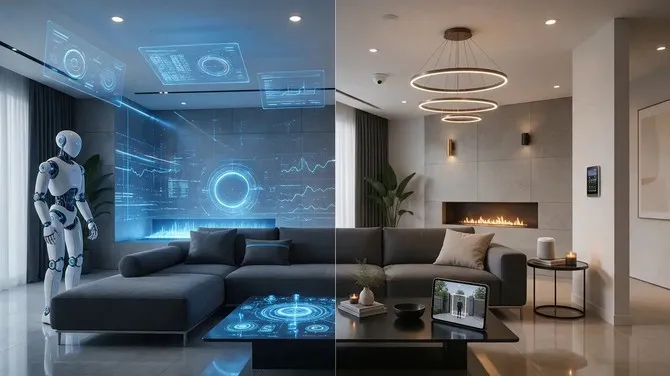
Walk through almost any new premium housing project in India today and you will hear the same phrase: "AI-powered smart home". It appears on brochures, in sample flats and in advertisements for everything from light switches to door locks. The promise is a home that understands you, anticipates your needs and runs itself. The reality is more modest, but also more useful than the hype suggests.
Many families discover this after moving in. The app has dozens of buttons nobody remembers. A motion sensor switches off the study light while someone is reading. The security camera sends alerts every time a plant moves in the wind. Before long, everyone is back to using the wall switches. The technology was not fake. It was simply sold as magic and installed without a plan.
To decide whether AI home automation is worth it, it helps to understand what the term actually means. Most smart homes run on rules: turn on the outdoor lights at sunset, or run a welcome scene when the front door unlocks. Artificial intelligence adds recognition and prediction on top of these rules. A camera can recognise a person rather than a cat. A voice assistant can understand a natural spoken request. A sensor can tell that someone is present even when they are sitting still.
Several of these features are genuinely mature and useful in Indian homes today:
- Security cameras with person and vehicle detection, which help reduce false alerts.
- Voice control in English and, increasingly, in Hindi for lights, curtains and air conditioning.
- Presence sensors that keep lights on while someone is reading or working quietly.
- Energy monitoring that shows which circuits or appliances are using the most power.
- Routines based on sunset, occupancy and time of day, so lighting changes naturally through the evening.
Other promises remain mostly marketing. A home that fully learns your habits without any setup is still rare and unreliable. Artificial intelligence does not replace the work of designing scenes, placing keypads and connecting systems properly. A single app that controls every brand flawlessly is still an aspiration rather than a reality, although new standards are slowly improving compatibility. And no camera, however intelligent, replaces good placement, reliable recording and sensible security habits.
The most important insight is that the feeling of a "smart" home rarely comes from artificial intelligence alone. It comes from good design. A few clearly named lighting scenes, well-placed sensors, simple wall keypads and curtains that respond with the lights create an experience that feels intelligent to everyone in the family, including grandparents and guests who will never open an app. AI features work best as helpers layered on top of that foundation.
Privacy deserves attention too. Many AI features process video, voice or usage data, and some send it to cloud servers. Before buying, it is worth asking whether core functions can work locally, without internet access, and how data is stored. Changing default passwords and keeping devices updated are simple steps that make a large difference.
So is AI home automation worth it? For specific purposes, yes. Smarter security alerts, presence-aware lighting, convenient voice control and clear energy insights all add real value at a reasonable cost. For the idea of a home that thinks for you, expectations are usually higher than what today's technology delivers. The best results come from starting with a reliable, well-designed system and adding intelligent features where they clearly solve a problem.
For readers who want a more detailed breakdown of which features are real, typical costs and the mistakes to avoid, this guide on AI home automation in India explores the topic further.
A truly smart home is not the one with the most gadgets. It is the one where everything simply works the way the family expects, every single day.
Disclosure: The author works with Brightmatic, a lighting and home automation company that publishes the guide linked in this article.


