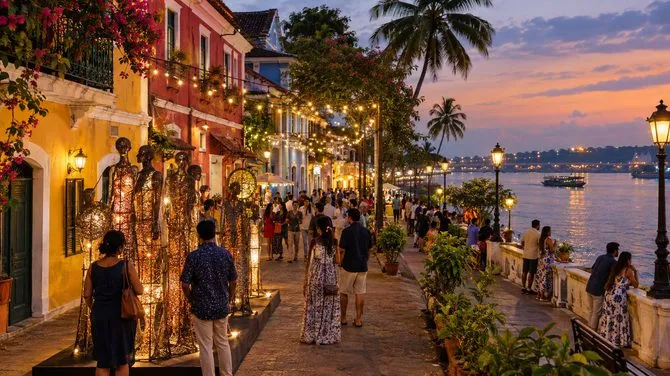
The Serendipity Arts Festival returns to Panjim from 13 to 20 December 2026, its eleventh edition, spread across the city's riverside venues, old schools, and public spaces. The dates are notable for hoteliers: the festival opens on a Sunday and closes on a Sunday, which means it brackets two full weekends with a working week in between. For Goa's small hotels, guesthouses, and heritage homes, that shape matters as much as the dates themselves.
The festival is free to attend, which changes the demand profile. Instead of a single high-spend crowd flying in for one headline night, Panjim gets eight days of staggered visitors: families doing a weekend trip, culture travellers staying the full stretch, artists and production crews on working stays, and locals who book a room for a night or two rather than drive home late. Entry is open to all, with registration for specific programmes, so the crowd builds through the week as word spreads about individual shows.
Here is the playbook we share with small properties for a festival shaped like this.
First, price the weekends and the week differently, and say so openly. The two weekends, 12 to 13 and 19 to 20 December, will compress first. The midweek nights in between are where a small property can win longer stays from remote workers and slow travellers who want the festival without the weekend rates. A visible midweek rate, or a stay-four-nights structure, pulls bookings that a flat seasonal price leaves on the table.
Second, sell the location honestly. The festival spans multiple Panjim venues, so "close to the festival" means different things to different guests. A property in Fontainhas can offer the walkable, old-quarter version. One across the river in Porvorim can offer quiet nights and a short drive in. Guests choosing between the two want that trade-off spelled out, not a vague "minutes away" claim.
Third, expect the working guest. The midweek stretch of an eight-day free festival attracts people who work mornings and attend shows in the evening. Reliable Wi-Fi, a usable desk or at least a quiet table, and a breakfast window that accommodates a 9 a.m. call are worth more to this guest than a welcome drink. Mention them in your replies and listings; almost nobody does.
Fourth, prepare for the questions that actually arrive. In the two weeks before the festival, guests ask the same things: Is Panjim walkable at night? Where do we park during the festival? How do we register for the shows we want? What is the best way to reach you from the airport or the Madgaon railway station? A single well-organized message that answers these before arrival saves your phone from twenty identical conversations and reads as genuine local expertise.
Fifth, think about the crew and artist economy. Festivals of this scale run on production teams, technicians, and performers who book practical rooms for long stretches, often late. A property that can offer a straightforward weekly rate, laundry, and flexible check-in hours can fill otherwise soft midweek nights with guests who come back every year.
Finally, remember what December in Goa already is. The festival lands in the middle of the state's busiest month, with Christmas and New Year immediately after. A guest who discovers your property during Serendipity and has a smooth stay is a warm lead for a Christmas week or next-season booking. Capturing their details and staying in touch after checkout is worth more than any single festival weekend's rate premium.
Goa's December rewards properties that plan in weeks, not days. The festival dates are public, the demand shape is predictable, and the booking window is open right now. The properties that fill their calendars early are the ones treating the next fortnight as the real sales period.
Sanskar Soni is the founder of Mehman, a WhatsApp-first hospitality platform being built for independent hotels in India. He writes about direct bookings, guest messaging, and the operating details that decide whether a small property wins its season.


