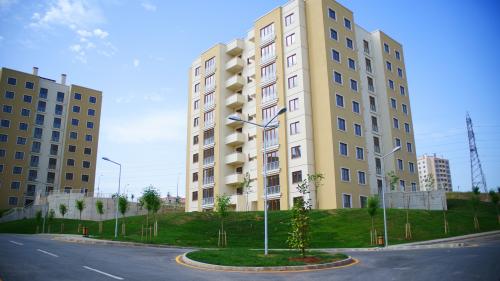
India’s commercial property market is becoming more institutional, and that is changing what owners expect from operational real estate.
As of March 2026, listed REIT and InvIT portfolios in India had crossed 195 million sq ft, with another approximately 37 million sq ft in the pipeline. Offices represented around 84 percent of the operational portfolio, while retail and industrial assets were also gaining ground.
For commercial real estate asset management, this shift raises an important question.
Is the building simply being maintained, or is it being actively managed to protect income, control expenditure and strengthen long term value?
Asset Management Starts Where Routine Maintenance Ends
Maintenance asks whether the lift works, the HVAC is serviced and the common areas are clean.
Asset management asks a wider set of questions.
Is occupancy moving in the right direction? Are tenants renewing? Is operating expenditure rising faster than expected? Which equipment is approaching replacement? Which capital improvements could reduce future costs or improve positioning? Where is risk accumulating across the portfolio?
That distinction matters as more assets enter institutional portfolios.
Effective commercial real estate asset management connects operational performance with financial and investment objectives rather than treating each building issue as an isolated maintenance task.
Occupancy Is More Than a Percentage
A building can report high occupancy and still have underlying performance risks.
Lease expiries may be concentrated within one year. Tenant requirements may be changing. Competing properties may offer better amenities, sustainability credentials or workplace experiences.
Asset managers therefore need to understand not only how much space is occupied, but why tenants stay and what could make them leave.
Our real estate management approach looks across tenant engagement, lease administration, facility upkeep, regulatory compliance and portfolio performance because these factors ultimately influence retention, cash flow and asset value.
Facilities Data Should Inform Investment Decisions
Facilities management operates much closer to the building.
Teams monitor equipment, energy use, maintenance schedules, vendors, safety, cleaning, security and occupant issues. Asset management operates at a broader strategic and financial level.
The real value appears when these two layers communicate.
Repeated HVAC failures may signal that planned maintenance is no longer enough and replacement CAPEX is required. Rising electricity consumption may justify an energy efficiency project. Increasing lift downtime may become an occupant experience and tenant retention risk.
Modern facilities management therefore provides much of the operational data that smarter asset decisions depend on.
Planned preventive maintenance, energy management, health and safety, crisis management, procurement and round the clock tenant support are all part of professionally managed property operations.
Delayed CAPEX Rarely Disappears
One of the easiest ways to improve short term cash flow is to postpone expenditure.
It can also create larger problems later.
Imagine a cooling system nearing the end of its useful life. Delaying replacement may protect this year’s budget, but repeated breakdowns can increase repair costs, energy consumption and tenant complaints before emergency replacement eventually becomes unavoidable.
Lifecycle planning helps us distinguish between expenditure that can reasonably wait and investment that protects future performance.
Strong commercial real estate asset management should therefore track equipment condition, remaining useful life, maintenance history and projected CAPEX rather than budgeting one year at a time.
Different Assets Need Different Performance Measures
An office tower, warehouse and logistics park cannot be managed using identical priorities.
For offices, tenant experience, HVAC performance, amenities, sustainability, indoor environment and lease retention may receive greater attention.
Industrial and logistics properties place heavier emphasis on access, loading infrastructure, floor performance, fire and safety systems, power reliability and operational continuity.
India now has approximately 300 million sq ft of Grade A industrial and warehousing stock, almost double the 2021 level. H1 2026 demand reached nearly 22 million sq ft, while new supply reached about 25 million sq ft.
For a warehousing company in india, a blocked loading area, unreliable power supply or poorly maintained fire system is not simply a facilities issue. It can directly affect throughput, safety and customer commitments.
That is why industrial property management needs to understand the occupier’s operations as deeply as the physical building. Our industrial and logistics capabilities similarly connect leasing, property management, technical expertise and market intelligence with asset performance.
Data Turns Property Issues Into Portfolio Decisions
The strongest asset management decisions are rarely based on one metric.
We should be able to compare occupancy, rental income, operating expenditure, maintenance costs, energy consumption, vendor performance, incident data and planned CAPEX across properties.
A single asset may show rising costs because equipment is ageing. If the same pattern appears across ten properties, it becomes a portfolio level capital planning issue.
Integrated portfolio management can create greater consistency in reporting, vendor management and decision making across multiple locations.
Manage What Happens Today With Tomorrow’s Value in Mind
India’s REIT growth is increasing the focus on operational quality, transparent reporting and sustained asset performance. The building cannot simply look valuable on an investment model. Its systems, tenants, costs and operations need to support that value every day.
At Colliers India, we bring together property management, facilities management, financial management and portfolio management to help owners connect daily operations with broader investment priorities.
Connect with Colliers India to strengthen operational visibility, plan lifecycle investments more effectively and build a commercial real estate asset management strategy focused on protecting performance and long term asset value.
FAQs
1. How does REIT growth change the way commercial properties are managed?
REIT growth increases the focus on occupancy, reporting, operating efficiency, lifecycle CAPEX and consistent long term asset performance.
2. What is the difference between facilities management and commercial real estate asset management?
Facilities management handles day to day building operations, while asset management uses operational and financial data to guide broader performance and investment decisions.
3. Why can delaying maintenance become a bigger asset management problem later?
Deferred maintenance can increase energy use, equipment failure, tenant complaints and emergency CAPEX, which can weaken both operating performance and asset value.